Just thought I'd write something on this in hopes of someone perhaps stumbling upon this information while searching for an answer.
Sejin and I had a lovely weekend in the countryside for his grandmother's birthday. Sejin's family, the Jo's, come from
Mungyeong, a rural, picturesque part of Korea that not a lot of foreigners venture to. More on Mungyeong later...
After arriving in Mungyeong and meeting his family (grandparents, aunts, uncles, cousins) at a restaurant in
Mungyeong Saejae Provincial Park, we headed to our room upstairs (minbak) where everyone sat around eating snacks and fruit near the air-conditioner. Sejin's grandmother had made "sook," a type of bread/rice cake which is green and really doesn't have much taste. I was really full from lunch, so politely refused about three times, but after some coaxing, had a little piece, because after all, grandma had made it.
I did ask Sejin what was in it, but although his English is quite good, he's no botanist, so he could not tell me exactly what herb was in it. Actually, I found out after an Internet search that "sook" is made from
mugwort, a herb that should be avoided by pregnant women. It can cause uterine contractions and preterm labor. Luckily, I had only eaten a very small piece, so I'm sure everything is fine. From what I understand, small amounts of mugwort are used in sook, mainly for colouring, and it's boiled beforehand, which removes much of its toxicity.
Later in the day, I wanted to get out of the minbak where everyone was sprawled out on the floor napping. Sejin and I took a short walk to a nearby building which was selling products made from "
omija" (오미자), a local specialty in Mungyeong. From what I understand (I always say this because I just can't understand everything!), omija is the berry from a plant found in Asia. It's a pretty, bright red berry. I've had omija tea before and it's quite good. We were browsing all the products made from omija...tea, bread, wine, etc. Sejin chose a bottle of omija extract. We were paying for it and the lady at the counter informed us that pregnant women should not eat omija. I was impressed with two things: she had noticed that I was pregnant -- a first! yay!; and she actually spoke up to warn us. I was grateful for that.
So, in one day visiting the countryside, I encountered two potentially dangerous herbs used in traditional oriental medicine. And they weren't mixed up in some kind of weird potion that would make me wary of them. Koreans have a long history of using herbs and other plants that we in the west don't often use. They're so used to them being around, that they're not even sure what all of them can do/cause. Every spring, my mother-in-law serves up a traditional spring meal made almost entirely of herbs she went and picked herself. Some of them don't even have English names... Of course, I know Sejin's family, or any Korean, would not give me anything meaning to cause harm, but it's better to be safe than sorry.


 We finished off the day with some samgyupsal, which is the best way to finish a day. It was really good.
 Sunday was spent in the air-conditioning. I worked on Doily Coaster, which is actually meant to be worked with a finer thread, so as to get a coaster sized coaster. But I wanted to use some of my green cotton to make something slightly bigger. I like how it looks and it was a one-day project, which I love.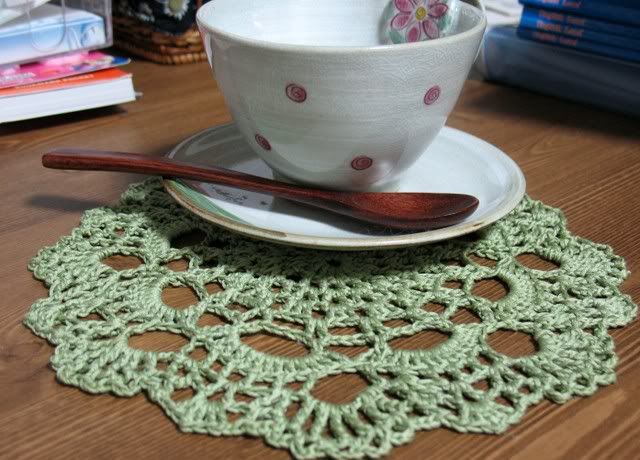
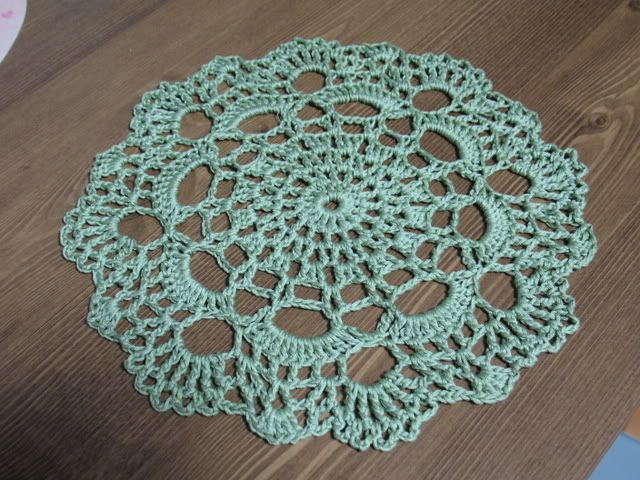 My busy week starts here. Between now and Thursday evening I have tonnes to do. We have train tickets to Yeosu booked for Friday, but we may cancel if it looks like rain. I'm mainly going to hit the beach, and if I can't, I'd rather postpone.


 Other than that, things are slow. I've been staying indoors in the air conditioning with Toto by my side. Oh yes, and we had a nice Indian dinner with Hayan and her boyfriend tonight. That got me out once this weekend...


 Finally, my new painting. I saw this painting of roses in a gallery in Insa-dong and had to have it. I decided to also have them frame it, since I knew that I would get it home and it would sit around for months before I got around to it. I love it.

 So the appointment was a success. Unfortunately, the doctor said she cannot under any circumstances tell me (when the time comes, around 20 weeks) if it's a boy or a girl. It's illegal in S. Korea, and she could lose her job. She said if I go to a smaller independent clinic somewhere, I'll probably get an answer. But I did get the go ahead to eat sushi, which I'm psyched about. She said as long it's fresh, it's OK. I'm still not going to go crazy, but I think I'll have to indulge once later in the summer. And, they gave me a nifty CD of the ultrasound. I can't figure out how to download it to my computer, so I just took a video of the video. The quality's not that great, but you can see it squirming in there.

 Last week I received a package from my
  I guess the biggest news as of late:
  We went to the hospital today and had a really good experience. The doctor was very nice AND speaks fluent English. The baby measures where it's supposed to, at 1.2 cm, and the heart was beating very nicely.


 Jebiwan, small temple near an 11th century Buddha carved in a cliff. We went here as sort of an afterthought, but I was glad that we did. The temple was in the middle of service, the blossoms were out, and it was just beautiful. The head monk also came out and said hello.
 Last weekend (the last weekend in April), Meg and I visited our good friend Louise down in


 Near
Near 

 Those weekends were good to break up the monotony of being inside working all day in this nice weather. The weather is getting even better now, so hopefully there will be more little weekend trips like these.
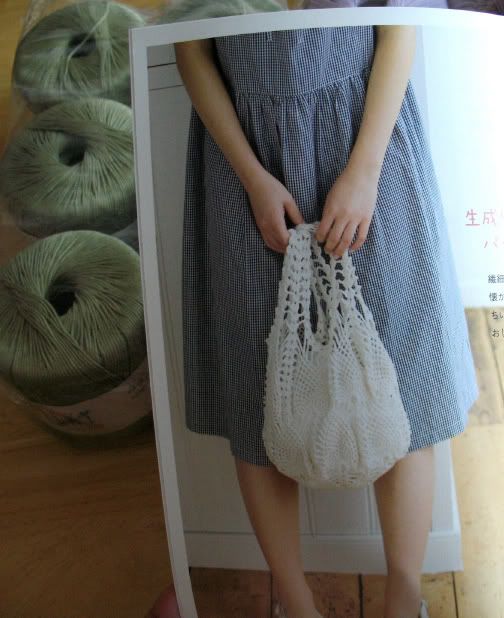
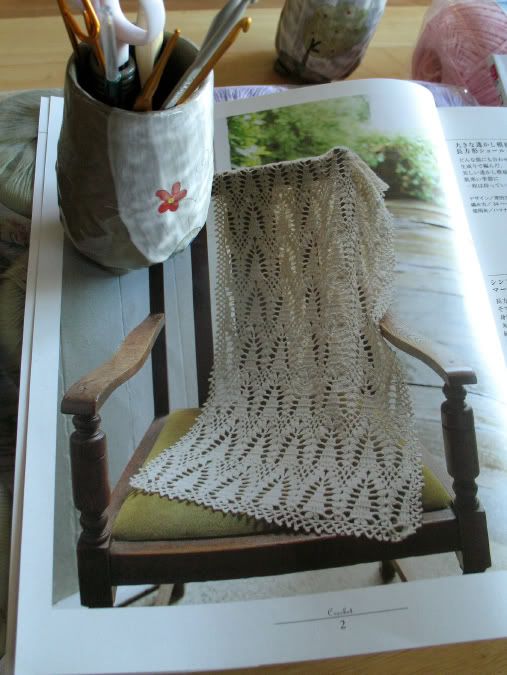
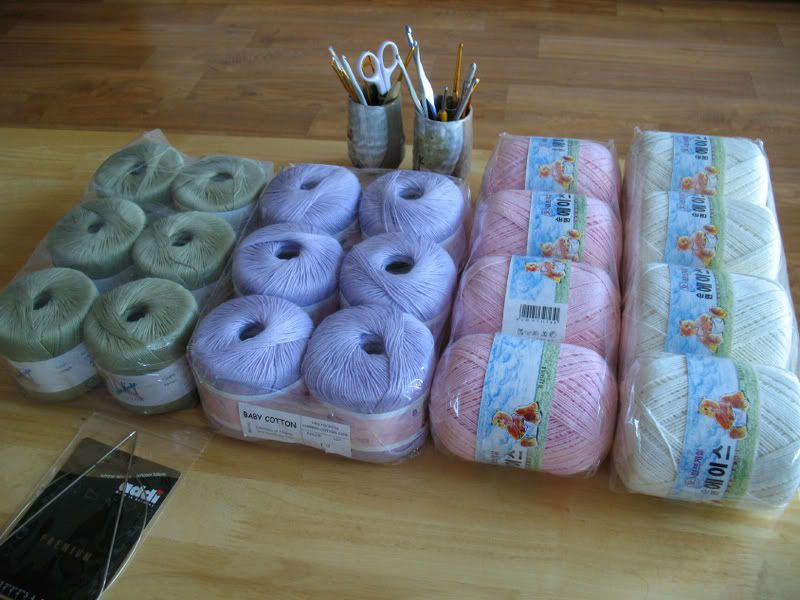 Also last week, I had to go to Kyobo Bookstore to get some new materials for new classes. Of course, I stopped by the Japanese Knitting section on my way to the English section. Always a mistake. The books and the patterns inside are too cute for words. And the worst part is that they're pretty cheap. Each book goes for about $10, which I'm sure is a lot cheaper than what people in the West pay to get Japanese books shipped over. Anyway, I picked up the two cutest ones, this time with some cute bag and scarf patterns. These are the patterns I'm particularly interested in: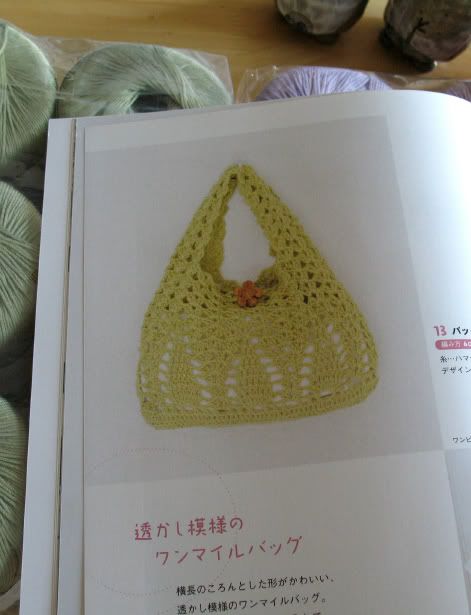
 I couldn't resist giving something a try with my new cotton, so I made these little coasters, which I just love. They only took me about an hour each.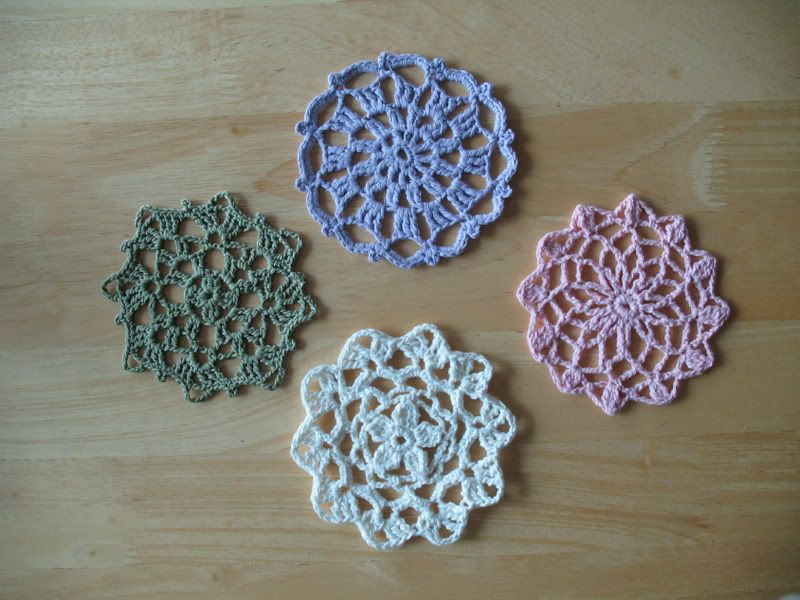
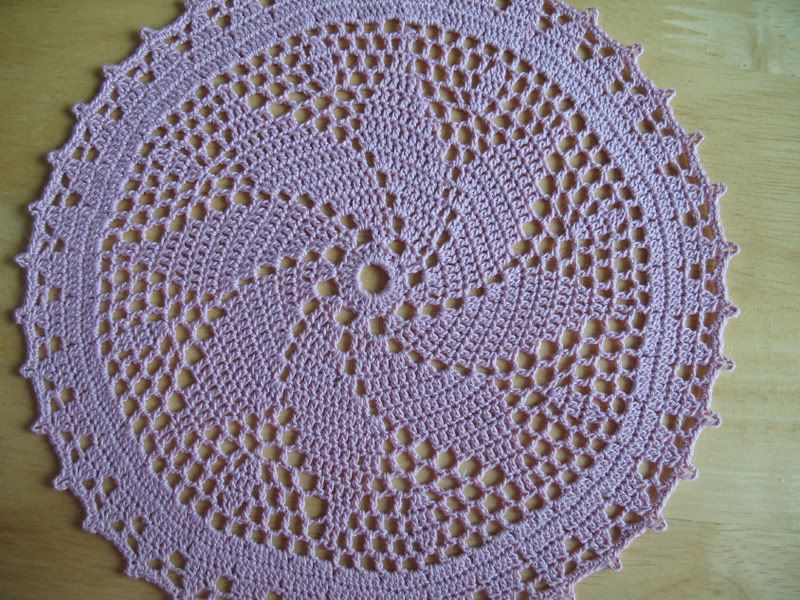
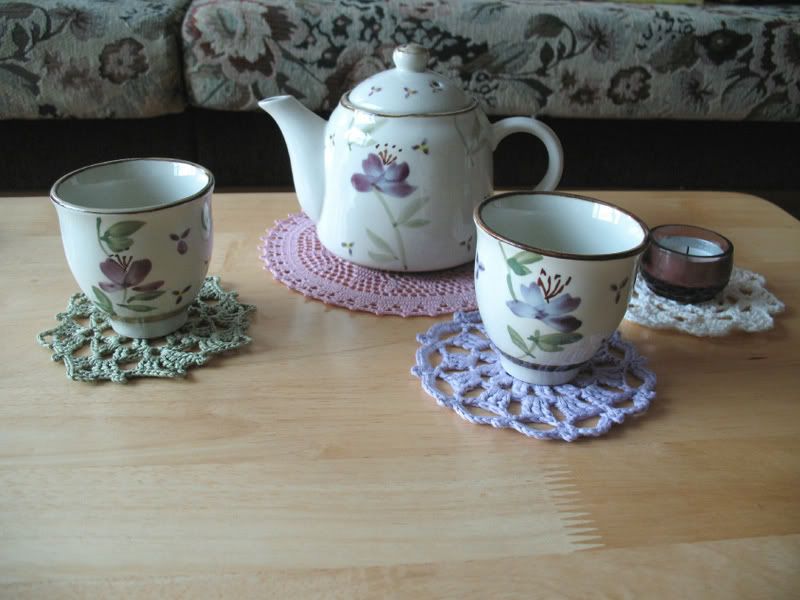 So, as the topic of this post suggests, doing these little crafts keeps me from going crazy. If I work well, I allow myself to do a couple rounds of crocheting. If I just goof off on Facebook or Ravelry, I can't. Very simple, but it works. I'm getting both work and crafting done, which keeps me satisfied. Last week I completed both my red silk doilie (which was not fun because of the twisty thread), and Antlia, which was for the Doilie Heads crochet-along. I like how both of them turned out. Now, I'm working on Crocus Doilie. I'm very excited about this one because I've been eying the pattern for months. I hope it turns out how I picture it.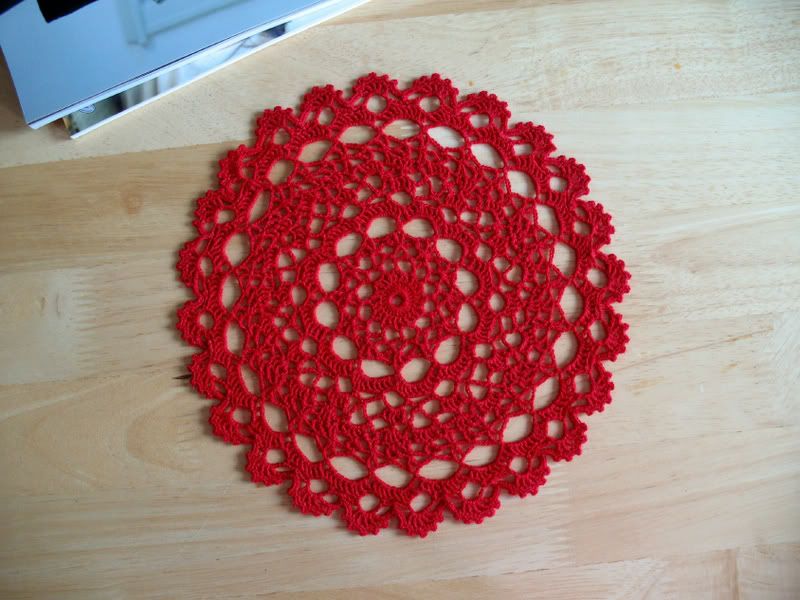
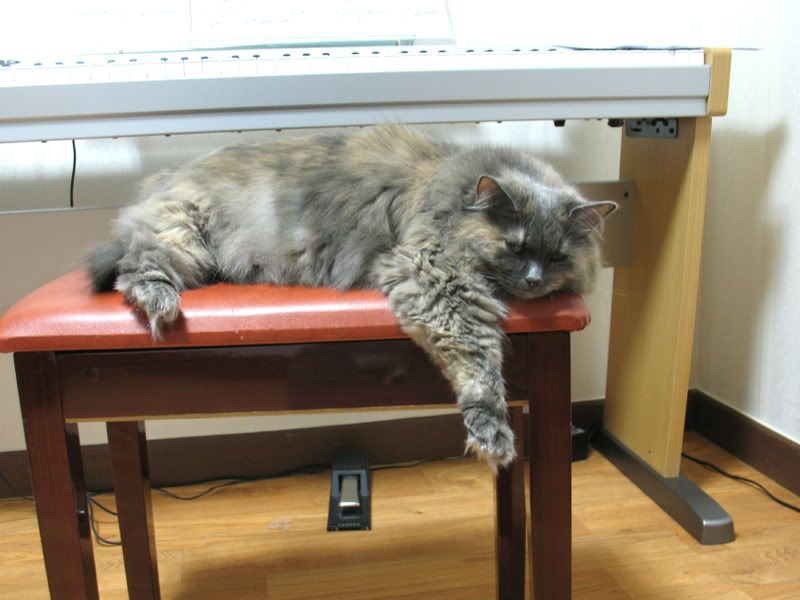
 Oh yes, and yet another time waster has entered by apartment -- a piano. I've been wanting a piano for years, and it's here. I bought it used, and I'm pleased with it. Nice sound. Surprisingly I haven't been drawn to it too many times. I'll likely play it more when these books are done. Toto loves the bench!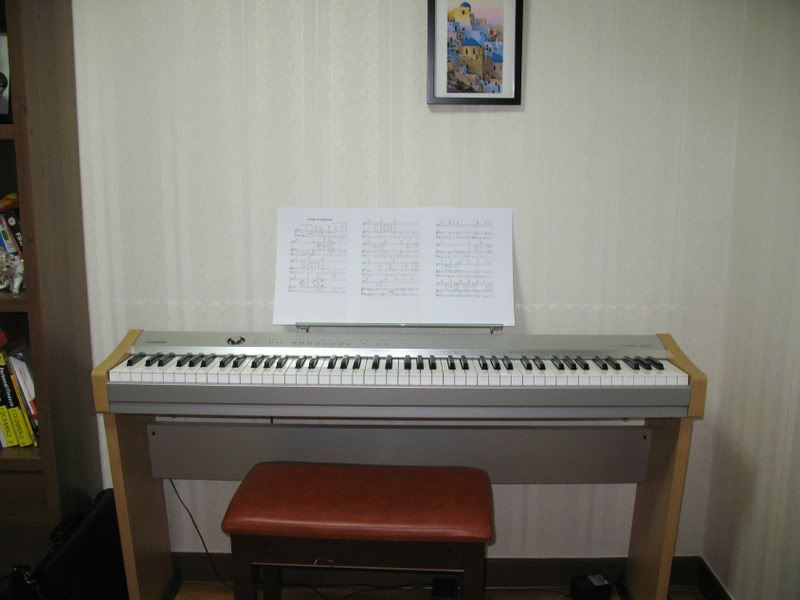
 Well, back to work!
 My big news today is that I'm getting a piano tomorrow. Someone on

 Sejin has discovered a niche market in Korea, which is selling insurance to foreigners. It seems a lot of foreigners actually want extra insurance, but it's really hard to find a representative at any company that speaks English. Furthermore, from what people have told me, many companies prefer not to sell to foreigners at all, which is really dumb. Although Sejin will not make much money selling term life contracts to foreigners, he enjoys speaking English, dealing with foreigners, and helping them make their lives easier. Slowly, he is becoming aware of the many inconveniences foreigners face in Korea, and I think he takes pride in helping them through it. He's very excited actually.